
Recently, world headlines buzzed with Elon Musk's announcement that he was shelving his audacious bid for social media platform Twitter. Away from the media spotlight, questions are being asked about the maverick billionaire's plans in India, too. A few days ago, a Reuters report said Musk's flagship Tesla had put on hold its plan to launch electric cars in India.

Even as domestic passenger car sales declined 29.4 per cent between April and August this year, exports grew 6.5 per cent, partially cushioning the blow from slowing sales.
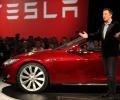
What will it take for Tesla to plug and play in India? Sector pundits say it's a mix of strategy, getting the price right, timing, the right talent, and above all, patience.
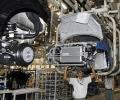
Hyundai Motor and Toyota Kirloskar Motor have announced the suspension of manufacturing operations at their respective plants amid coronavirus outbreak. On Sunday, various automakers like Maruti Suzuki India, Honda Cars, Mahindra & Mahindra and Fiat announced a temporary halt in manufacturing operations at their respective facilities.

Czech automaker Skoda on Thursday globally unveiled its all new SUV Kushaq which would take on the likes of Hyundai Creta and Kia Seltos in the fastest growing mid-sized SUV segment in the domestic market. The model is the first production car as part of the company's India 2.0 project. Under the lead responsibility of Skoda Auto, Volkswagen Group is investing 1 billion euros in its model campaign in the Indian subcontinent to strengthen its presence.

Officials were surprised at how quickly smugglers appraised the Covid situation to recruit jobless migrant workers to ship gold.

Finance Minister Nirmala Sitharaman on Tuesday unveiled a Rs 39.45 lakh crore Budget with a view to fire up the key engines of the economy to sustain a world-beating recovery from the pandemic. This was Sitharaman's fourth Budget. While the taxpayers were left in the lurch, once again, was she able to cheer Corporate India?

'If it is your second car (electric vehicle), you typically keep it for travel within the city.' 'And the first car (internal combustion engine-run vehicles) can then be used to travel to some other cities.'

India's first home-grown mapping company MapMyIndia is looking to list in the public market by raising around Rs 1,200 crore at a Rs 6,000-crore valuation. Sources said the company is ready with its draft red herring prospectus documents and is likely to file as early as next week. While the money will be used for business expansion, it will also give MapMyIndia's early investors, including Qualcomm, PhonePe, and Japanese mapmaker Zenrin Co., a chance to exit. The Verma family, which founded the company, will continue to remain promoters.

Reliance on a single model begins at about 40% and goes up to 80 % in case of some companies

Increasingly, more companies are making cars in the country and exporting them globally.

The Virtus is indeed designed to look, act and behave like a well-built European sedan that swims in the segment between the compact sedan VW Vento and the larger Passat, says Pavan Lall.
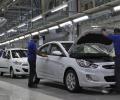
The country's leading automakers Maruti Suzuki and Hyundai Motor reported a decline in dispatches to dealers in March as shortage of electronic components impacted production. On the other hand, Tata Motors, Skoda and Kia India posted their highest ever monthly wholesales last month. Toyota Kirloskar Motor said its dispatches in March were the highest in the last five years while Mahindra & Mahindra also reported a robust increase in its passenger vehicle dispatches in March.

The traffic tells a story. During the lockdown, it took 45 minutes to zip through the deserted 35-km stretch from Chennai to reach the automobile heart of Sriperumbudur-Oragadam, where the big names of the car industry - Hyundai Motor India, Renault-Nissan India, Daimler India Commercial Vehicles, Apollo Tyres, and Royal Enfield - are based.

With entry-level cars being preferred amid the pandemic, market leader Maruti Suzuki has strengthened its hold, along with Hyundai Motor India.
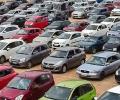
Passenger vehicle dispatches from factories to dealers in India fell 8 per cent in January, mainly due to semiconductor shortage, auto industry body SIAM said on Friday. The total passenger vehicle wholesales dropped to 254,287 units in January 2022 as compared to 276,554 units in the same month of last year. Last month, passenger car dispatches stood at 126,693 units as compared to 153,244 units in the year-ago period. Similarly, van dispatches declined to 10,632 units in the period under review from 11,816 units in January 2021.

According to the latest data from SIAM, in the top 10 best passenger vehicles, Maruti's Alto retained the top position last month
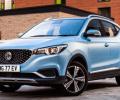
The MG ZS EV, to be unveiled next month, will go head to head with Hyundai Kona, launched in July this year as the country's first fully electric SUV.

Close to 50 models were launched in India in the past 12 months, but companies have not been able to realise their potential due to the pandemic.
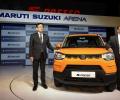
The country's largest carmaker Maruti Suzuki India will not "walk away" and fight to get back to 50 per cent market share in the domestic passenger vehicle segment, according to company Chairman R C Bhargava. The auto major, which is commemorating 40 years of operations, has seen its market share drop to 43.38 per cent in FY22 from a peak of 51.21 per cent in FY19. In order to get back its dominant leadership, the company plans to drive in models catering to both urban and smaller cities and rural areas.

Auto experts from CarJasoos will answer all your questions related to buying, selling or maintenance of new or used cars.

Most of the hirings are, however, in the entry or junior level.

That's because India does not have a serious venture capital industry with an appetite for risk, observes T N Ninan.

Auto majors, including Maruti Suzuki India, Hyundai and Tata Motors, on Sunday reported high double-digit growth in their domestic passenger vehicle sales in July riding on stabilisation of macro-economic factors and better consumer sentiments. Similarly, Honda, Nissan, MG Motor and Skoda also reported healthy growth in their sales last month leveraging on improved market mood amid prevailing lower coronavirus infection rate, despite supply constraints of semi-conductors. The country's largest carmaker Maruti Suzuki India's (MSI) domestic sales increased by 39 per cent to 1,41,238 units last month as against 1,01,307 units in July 2020, the company said in a statement.

Auto loan costs remain stubbornly high.
Leading carmakers Maruti Suzuki and Hyundai witnessed a double-digit drop in sales in October on account of the global semiconductor shortage impacting production. Kia India, Honda Cars and MG Motor also saw a fall in dispatches last month as compared with October 2020. However, companies like Tata Motors, Mahindra, Nissan and Skoda managed to post positive numbers last month despite the supply chain challenges.

Maruti Suzuki India's grip on the country's car market tightened in October with six of its models, including the newly launched mid-sized sedan Ciaz, featuring in the top 10 selling brands in the month.

Passenger vehicle majors like Hyundai, Tata Motors, M&M, Toyota Kirloskar and Honda on Wednesday reported growth in domestic sales in August riding on festive sentiments, although market leader Maruti Suzuki posted a decline amid a semiconductor shortage affecting the industry. The country's largest carmaker Maruti Suzuki India Ltd (MSIL) reported domestic sales at 110,080 units, as compared to 116,704 units in the same month last year, down 6 per cent. "Sales volume of the company in August 2021 was affected due to electronic components shortage.

For Mahindra & Mahindra (M&M), which has just started executing a comeback strategy for wresting back ground it lost to rivals, this could not have come at a worse time. The maker of the Bolero Neo and the Thar models on Thursday said it would have to halt production at its automotive plant for a week due to the worsening supply situation of semiconductors.
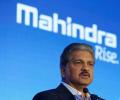
With increased consumer awareness and government support in place, it is the opportune time to enter the electric passenger vehicle segment, Mahindra Group Chairman Anand Mahindra said on Monday. With an eye on gaining leadership in the electric four-wheeler segment, the Indian auto major announced that it will launch five new electric Sports Utility Vehicles (SUVs) for both domestic and international markets, with the first four expected to hit the road between 2024 and 2026. The company would introduce the first of the five e-SUVs towards the end of 2024, starting with the Indian market.

Ahead of the peak festive season, India's passenger vehicle makers are staring at a cumulative order backlog of nearly 500,000 units as chip shortage continues to cripple production. The crisis is forcing companies to change their production plans frequently and take a call on the variants they can manufacture based on the availability of semiconductors. The booking numbers are not a true reflection of demand, said manufacturers.

Maruti Suzuki India continued its grip in the passenger vehicles market in India with five of its models in the top ten best selling models in June.

According to government data, the Centre procured only 35,179 ventilators out of the 50,000 originally ordered.

The edge that Maruti Suzuki enjoys over Hyundai and other rivals stem primarily from its gigantic scale, reports Ajay Modi.

Maruti, Hyundai, Tata Motors, Mahindra & Mahindra and Honda saw their passenger vehicle sales improve in August compared to the same month last year, although Ford and Toyota witnessed a decline.

Global petrochemical major LyondellBasell Industries, for which Reliance Industries has made a preliminary bid, has entered into an agreement with Hyundai Engineering Plastics for manufacturing certain products in India.
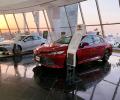
The growth momentum that started during the festival season is likely to sustain in the new year, reports Arindam Majumder.

Maruti Suzuki India is eyeing a leadership position in the SUV segment as it continues to add new products across various sub segments, a top company official said on Wednesday. The country's largest carmaker has bolstered its presence in the high volume entry and mid level SUV segments with new Brezza and all new model -- Grand Vitara. "In every segment except SUV, we are the market leader by a distance. "It is only in the SUV that we are behind, so we need to catch up. Clearly, we have to become number one in the SUV space also," Maruti Suzuki India MD and CEO Hisashi Takeuchi said in an interaction on the sidelines of the global unveiling of Grand Vitara.
Though Maruti Swift remains on top of the list, Hyundai Grand i10 is catching up Soon.
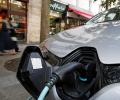
Automobile manufacturers, new and old, as well as ancillary suppliers are set to spend a combined Rs 70,630 crore over the next five years on either entering the electric vehicle segment or stepping up their presence in it. Data culled from announcements made by firms shows India, the world's fifth largest automobile market, is poised to receive one of the biggest capex pushes ever to fuel the transition from internal combustion engines to electric motors and batteries as part of a green drive. The EV push, egged on by the government's emphasis on electric mobility to meet its net zero targets, is expected to yield at least 25 electric vehicles - new ones as well as electrified versions of existing vehicles running on internal combustion engines.
 © 2026 Rediff.com - Advertise with us - Disclaimer - Privacy Policy - Sitemap - Feedback - About us - Terms of use - Grievances